 Sunday 08 November 2026
 P807N1
How Does AI Voice Cloning Scams Work? Be Careful of Voices That Sound Like Your Loved Ones! As artificial intelligence technologies continue to advan...
See more
 Homepage
 Blog
Home Blog
NASA Is Preparing to Establish a Permanent Base on the Moon: What Will Life on the Moon Be Like?
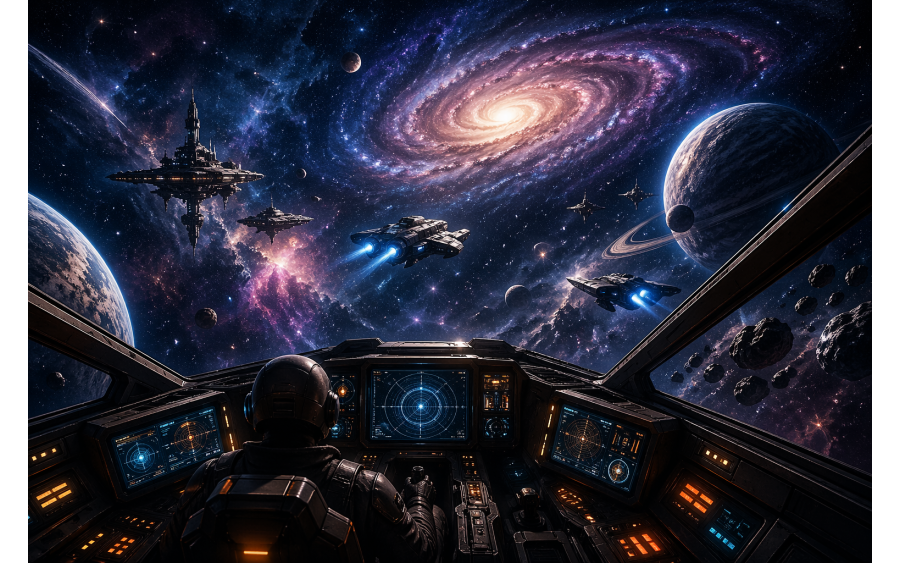
A new era is beginning in humanity's journey into space. The idea of living on the Moon, which we have seen in science fiction movies for years, is now becoming a real goal for space exploration. Through its Artemis program, NASA aims to send humans back to the Moon and develop the infrastructure needed to make long-term human presence on the lunar surface possible in the future.
So, how will astronauts live on the Moon? What will the bases look like? How will people eat, where will they sleep, and how will they communicate with Earth? Here is what you need to know about the future of life on the Moon!
NASA's Artemis program aims not only to send humans back to the Moon but also to establish a sustainable infrastructure for lunar exploration. Its long-term objectives include enabling astronauts to stay on the lunar surface for extended periods, conduct scientific research, and develop living environments that could support future lunar settlements.
The lunar south pole is one of the regions attracting the most attention from scientists. Strong evidence suggesting the presence of water ice in some permanently shadowed craters makes this area particularly important for future missions.
If lunar water resources can be used, they could help meet astronauts' drinking water needs and, with the development of suitable technologies, contribute to producing oxygen and rocket fuel.
Bases built on the lunar surface will need to be very different from homes on Earth. This is because the Moon has an extremely thin atmosphere, dramatic temperature fluctuations, and no natural protection against space radiation.
For this reason, future lunar bases are expected to be designed with specialized protection systems.
Some of the key features of these planned living spaces include:
Pressurized Living Quarters: Enclosed areas with controlled pressure and an Earth-like atmosphere will allow astronauts to breathe safely.
Radiation Protection: Special materials and protective structures reinforced with lunar soil will help shield astronauts from harmful space radiation.
Temperature Control Systems: Advanced insulation and climate-control technologies will protect living spaces from the Moon's extreme hot and cold conditions.
Energy Systems: Solar panels and potentially nuclear energy solutions developed in the future could provide electricity for lunar bases.
Air and Water Recycling Systems: Recycling used water and processing air for reuse will help reduce resource consumption.
These systems are intended to make lunar living spaces less dependent on supplies transported from Earth.
One of the most important challenges of living on the Moon will be food supply. Transporting food regularly from Earth would be both expensive and logistically difficult, making alternative solutions necessary in the future.
During the initial stages, astronauts are expected to consume freeze-dried meals, specially packaged foods, and products with long shelf lives.
In the long term, however, controlled plant-growing systems could become increasingly important. Using artificial lighting, water recycling, and specialized cultivation technologies, it may become possible to grow vegetables and certain plants inside lunar bases.
These systems could contribute not only to nutrition but also to astronauts' psychological well-being.
Producing water and oxygen will be essential for establishing permanent human life on the Moon. Transporting all these resources from Earth would be extremely difficult and expensive.
One method scientists are investigating involves using water ice found near the lunar south pole. In the future, robotic systems could extract and process this ice, turning it into usable water.
Water can also be separated into hydrogen and oxygen through a process called electrolysis. The oxygen could be used for breathing, while hydrogen and oxygen could potentially be used to produce rocket propellant with suitable systems.
Successfully implementing these technologies would represent a major step toward creating self-sustaining living environments on the Moon.
Living on the Moon will be very different from everyday life on Earth. Astronauts will need to carry out their activities according to specific safety procedures and mission schedules.
The Moon's gravity is approximately one-sixth of Earth's gravity. Although this may make movement seem easier, spending long periods in a low-gravity environment can pose risks to muscle and bone health.
For this reason, astronauts will need to exercise regularly.
Daily activities on the Moon will likely include:
Conducting scientific experiments and research.
Exploring the lunar surface using robotic systems.
Maintaining and repairing living facilities.
Performing regular exercise and health checks.
Communicating with teams on Earth.
Monitoring water, oxygen, and energy systems.
Astronauts will need to prepare for psychological challenges as well as physical ones. Living in a confined environment for extended periods, being far away from Earth, and having limited social interaction will be among the major difficulties.
One of the most important requirements for future lunar bases will be reliable communication. Astronauts will need to stay connected with control centers on Earth, share scientific data, and carry out their missions safely.
To achieve this, NASA and other space agencies are working on developing communication and navigation infrastructure around and on the lunar surface.
Advanced satellite networks, laser-based communication systems, and specialized data transmission technologies could make it possible to send large amounts of data between the Moon and Earth.
However, it is important to remember that communication signals take approximately 1.3 seconds to travel one way between the Moon and Earth. Therefore, astronauts will sometimes need to make decisions without waiting for immediate instructions from Earth.
Establishing long-term living environments on the Moon will be important not only for space exploration but also for future missions to more distant destinations.
Technologies developed on the Moon, including resource utilization, energy production, robotics, and life-support systems, could also be used in future crewed missions to planets such as Mars.
Furthermore, the Moon's low gravity and unique environmental conditions could create new opportunities for scientific research.
However, establishing a permanent lunar settlement will not be easy. High costs, radiation exposure, extreme temperature variations, lunar dust, and risks to human health remain major challenges that must be addressed.

How Does AI Voice Cloning Scams Work? Be Careful of Voices That Sound Like Your Loved Ones! As artificial intelligence technologies continue to advan...
See more