 Friday 13 February 2026
 Ferhunde
At its core, Alchemy Factory is about building efficient production systems. You gather resources, refine them, combine elements, and gradually unlock...
See more
 Homepage
 Blog
Education-Technology
The Connection Between PC Gaming and Crypto
Blog
Education-Technology
The Connection Between PC Gaming and Crypto
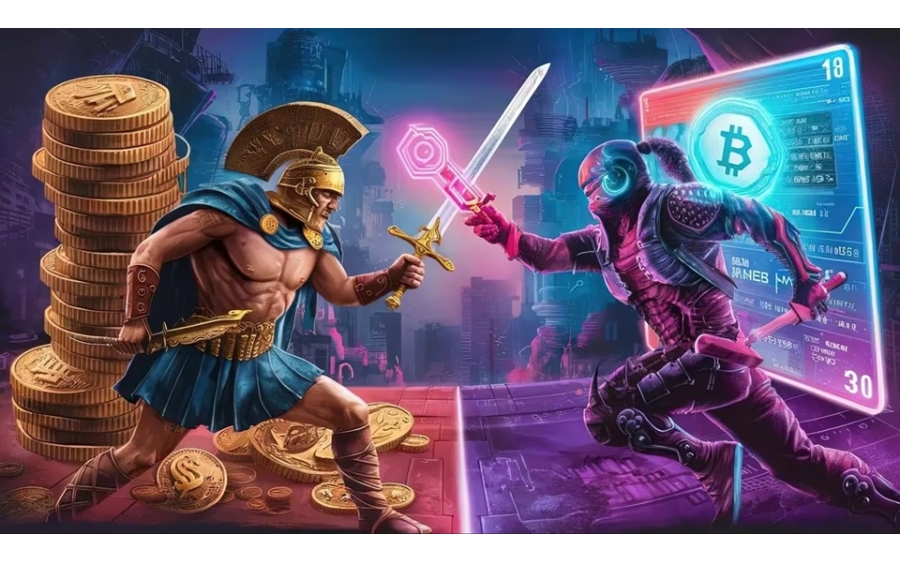
Two major forces of the digital world the gaming industry and blockchain technology have become increasingly intertwined in recent years. The relationship between PC games and cryptocurrencies goes far beyond payment methods; it now represents a transformation that is fundamentally reshaping in-game economies.
In this article, we explore how PC gaming intersects with the world of crypto, which technologies are being used, and what the future may hold.
PC games have long featured virtual currencies and digital items. However, these assets are usually tied to the game’s servers and are not truly owned by the player.
Blockchain technology is changing this reality.
NFTs (Non-Fungible Tokens) created on blockchain networks such as Ethereum make it possible for players to truly own their in-game assets.
For example:
A weapon skin
A rare character
A special in-game piece of land
Since these assets are recorded on the blockchain, they can be sold, traded, or even transferred across different platforms.
In traditional PC games, players invest time while developers earn revenue. In crypto-supported games, however, this balance shifts.
Axie Infinity
The Sandbox
In these types of games, players can:
Earn crypto tokens by playing
Mint or sell NFTs
Trade digital assets
At certain times, especially in developing countries, players have generated significant income through these games.
However, it is important to remember that the volatile nature of the crypto market makes this earning model risky.
Major PC gaming platforms are not yet fully crypto-focused.
For example:
Valve Corporation, the owner of
Steam
has implemented periodic restrictions on blockchain-based games.
On the other hand, some independent developers publish blockchain-based PC games directly through their own platforms.
Some advantages blockchain brings to PC games include:
Transparent transaction history
Reduced risk of counterfeit items
Direct player-to-player trading
Decentralized economic systems
However, there are also disadvantages:
High transaction fees (gas fees)
Fraudulent projects
Speculative price bubbles
The integration of crypto and PC gaming is further strengthened by the concept of the “metaverse.” In virtual worlds, digital identities, land sales, and economic systems can operate on blockchain infrastructure.
Projects such as Decentraland are among the pioneers in this space.
In the future, we may see:
Cross-game item transfers
Game markets integrated with the real-world economy
Game communities governed by DAO structures
The relationship between PC games and cryptocurrencies is still in its developmental stage. While major gaming companies approach the space cautiously, the technology continues to evolve rapidly.
This field offers:
New revenue models for players
New opportunities for investors
Alternative economic systems for developers
However, factors such as high volatility, lack of regulation, and technical complexity must be carefully considered.
The connection between PC games and cryptocurrencies has the potential to shape the future of the digital economy.
Gaming is no longer just entertainment; it is becoming a fully developed economic ecosystem.
At its core, Alchemy Factory is about building efficient production systems. You gather resources, refine them, combine elements, and gradually unlock...
See more
Movies and TV Series Adapted from Video Games In recent years, the world of video games has expanded beyond console and computer screens, making a po...
See more