

 Monday 21 September 2026
 Ferhunde
What Is the Difference Between AMOLED and OLED Displays in Smartphones? When buying a smartphone, display technology is just as important as the proc...
See more
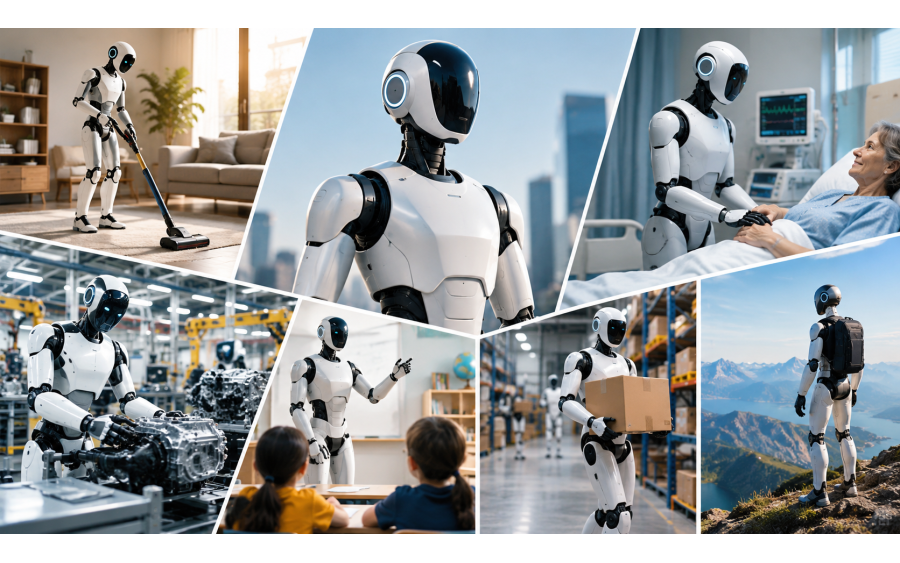
As robot technology continues to develop rapidly in recent years, humanoid robots have become one of the most remarkable areas in the world of technology. Designed to resemble the human body, these robots can have abilities such as walking, carrying objects, communicating, perceiving their surroundings, and performing specific tasks.
With advances in artificial intelligence, sensor technology, and robotic systems, humanoid robots are expected to be used not only in factories but also in many different areas of everyday life. So, where can humanoid robots be used?
Humanoid robots are robots designed to imitate the human body in terms of their physical structure or movement capabilities. They generally have two arms, two legs, and a human-like body structure.
One of the important features of these robots is that they can be developed to work in environments designed for humans. For example, stairs, doors, shelves, and various hand tools are designed with humans in mind. Having similar physical characteristics may allow humanoid robots to perform tasks in these existing environments more easily.
Thanks to artificial intelligence, some advanced robots can perceive their surroundings, recognize objects, and perform assigned tasks with a certain level of autonomy.
One of the most important potential applications of humanoid robots is the manufacturing sector.
Robots can be used for tasks that are repetitive, physically demanding, or potentially dangerous for workers. Examples include carrying parts, placing products in specific locations, assisting with assembly processes, and supporting warehouse operations.
Their ability to work in environments designed for humans without requiring factories to be completely redesigned could be an important advantage for humanoid robots.
As e-commerce continues to grow, moving and sorting products efficiently in warehouses has become increasingly important.
In the future, humanoid robots may be used in warehouses to transport products, retrieve items from shelves, move packages to designated areas, and support logistics operations.
Robots that can work alongside human employees may help reduce the workload associated with heavy or repetitive tasks.
The healthcare sector is another area where humanoid robots could potentially be used.
In the future, these robots may assist healthcare workers by transporting medical supplies, delivering medication and equipment to relevant departments, or performing certain routine tasks.
Humanoid robots could also potentially be used in elderly care. For example, some robots may remind people about their daily tasks, communicate with them through simple conversations, or call for help when necessary.
However, robots used in healthcare would need to meet very high standards in terms of reliability, privacy, and human safety.
As populations age, the need for care services is also increasing. For this reason, humanoid robots could become an important tool for home care and daily-life assistance in the future.
Robots could provide support with tasks such as:
Carrying objects around the home,
Assisting with simple daily activities,
Providing reminders,
Calling for help in emergencies,
Communicating with users through voice.
The goal would not necessarily be to completely replace human care, but rather to make everyday life easier for individuals and reduce the workload of caregivers.
The possibility of humanoid robots entering homes in the future is one of the most widely discussed applications of robotic technology.
A household robot could potentially assist with cleaning, carrying objects, putting away groceries, or performing certain household tasks.
Their humanoid design could allow robots to operate in kitchens, living rooms, and other areas designed for human use.
However, home environments are much more unpredictable than factories. Robots therefore need to be able to recognize different objects, move safely around people, and adapt to unexpected situations.
Humanoid robots could also potentially be used in hotels, restaurants, and similar service environments.
For example, robots could greet customers, answer basic questions, carry small items to rooms or common areas, or assist employees with routine tasks.
In environments that require service around the clock, the ability of robots to perform certain tasks continuously could be an attractive option for businesses.
Robots could also serve as support tools in the education sector.
Humanoid robots could interact with students, conduct simple educational activities, or act as conversation partners for practicing foreign languages.
In particular, using robots in educational institutions could increase children's interest in technology and robotics.
However, rather than completely replacing teachers, it may be more realistic for robots to be used as tools that support the educational process.
One of the most important potential advantages of humanoid robots is their ability to perform tasks in environments where it may be dangerous for humans to work.
Specially designed robots could be used in situations involving fires, high temperatures, hazardous chemicals, radiation, or areas that are difficult for humans to access.
Because of their humanoid structure, some robots may be able to use stairs, doors, or equipment designed for humans.
In such environments, the ability to perform tasks without putting human lives at risk could provide a significant advantage.
Space exploration is another potential area where humanoid robots could be used.
Robots capable of working with vehicles and equipment designed for humans could potentially assist astronauts during future space missions.
For example, robots could be used for maintenance, transporting equipment, and performing certain physical tasks.
This approach could provide valuable support, particularly in environments that are difficult or dangerous for humans to access.
In the construction industry, carrying heavy materials, performing certain assembly operations, and handling repetitive physical tasks could be suitable applications for robots.
The ability of humanoid robots to use stairs, move through the same workspaces as humans, and potentially operate tools designed for people could increase their potential in this sector.
Rather than completely replacing construction workers, it may be more likely that robots will assist workers with physically demanding and dangerous tasks in the future.
One of the most important advantages of humanoid robots is their potential ability to adapt to environments designed for humans.
For example, factory workspaces, home kitchens, and hospital corridors are designed around human needs. Robots with human-like movement capabilities may be able to operate in these environments without requiring extensive specialized robotic infrastructure.
In addition, robots can work for long periods without becoming physically tired and can provide consistent performance in repetitive tasks. However, reliability in real-world environments, maintenance costs, and the limitations of artificial intelligence in decision-making remain important considerations.
One of the biggest questions surrounding the development of humanoid robots is whether robots will eventually perform jobs currently carried out by humans.
The answer may vary depending on the application and the level of technological development. Robots could become increasingly common in certain repetitive and physically demanding tasks. However, the human element is likely to remain important in many roles that require creativity, human interaction, complex decision-making, and empathy.
For this reason, models in which humans and robots work together may become increasingly common in the future.
As artificial intelligence, computer vision, sensors, and robotic hardware continue to improve, humanoid robots are expected to become increasingly capable.
While they are currently seen mainly in research, testing, and certain industrial applications, humanoid robots could eventually have a much broader range of uses, from factories and homes to healthcare and logistics.
However, the widespread adoption of this technology will depend on more than robots simply being able to move and perform tasks. Issues such as safety, cost, energy consumption, the reliability of artificial intelligence systems, and safe interaction between humans and robots will also need to be addressed.

What Is the Difference Between AMOLED and OLED Displays in Smartphones? When buying a smartphone, display technology is just as important as the proc...
See more

Why Does a Computer Slow Down? Effective Ways to Speed Up Your Computer As computers are used over time, they may gradually lose some of their initia...
See more
